Accidents happen unexpectedly—whether it’s a car crash, slip and fall, workplace injury, or another personal injury event. One of the most stressful consequences is not just the physical pain, but the financial burden of medical treatment. Emergency room visits, ambulance fees, surgeries, rehabilitation, and follow-up care can quickly add up to thousands or even tens of thousands of dollars.
A common question many people ask is: who pays medical bills after accident in the USA?
The answer is not always simple. It depends on several factors including insurance coverage, fault determination, state laws, and sometimes legal action. This article explains everything you need to know in detail so you can understand your rights and financial responsibilities after an accident.
Understanding Medical Bill Responsibility After an Accident
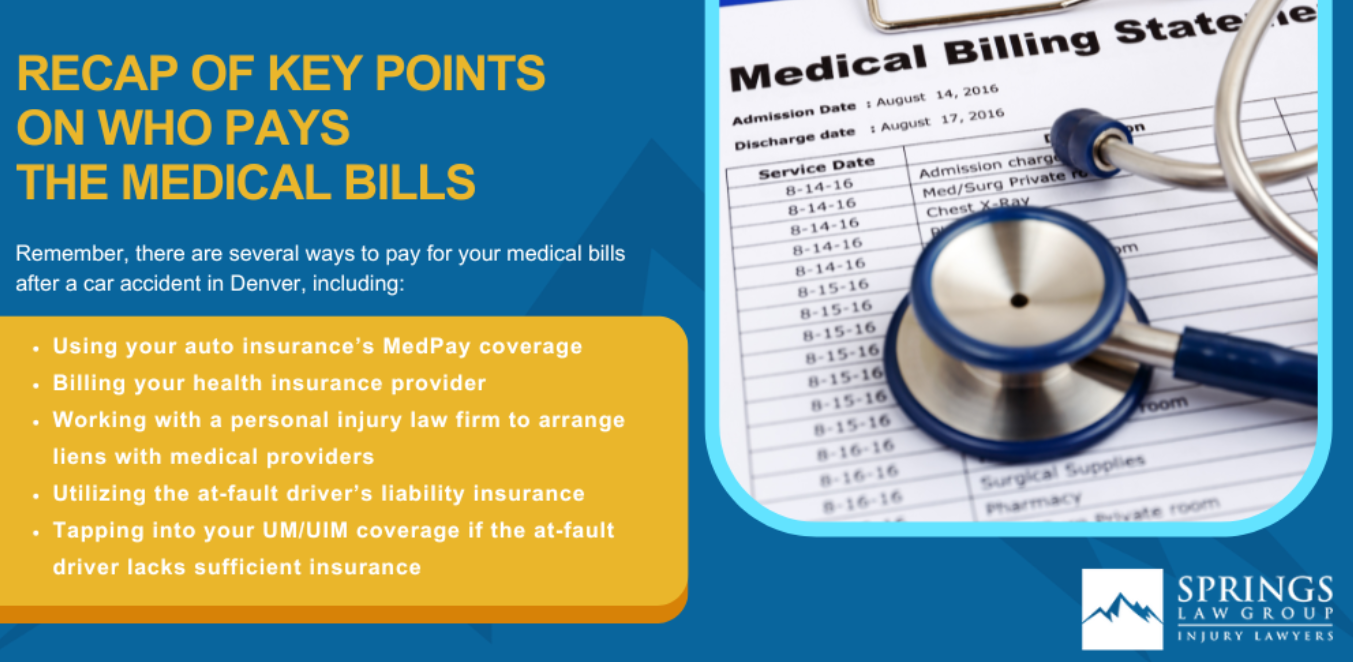
When an accident happens in the United States, medical bills are not automatically paid by one specific party. Instead, payment responsibility is distributed among different possible sources:
- Your health insurance
- Auto insurance (Personal Injury Protection or MedPay)
- The at-fault party’s liability insurance
- Workers’ compensation (if work-related)
- Out-of-pocket payment
- Settlement or lawsuit compensation
Each situation is unique, and multiple payers may be involved at different stages.
1. Your Health Insurance: The First Line of Coverage
In most cases, your health insurance is the first payer for medical treatment after an accident.
How it works:
If you go to the emergency room after a crash or injury, the hospital will typically bill your health insurance first. This applies whether the accident was your fault or someone else’s.
What health insurance covers:
- Emergency room visits
- Hospital stays
- Surgery
- Medication
- Physical therapy (partial coverage)
Important limitation:
Health insurance usually does not accept full financial responsibility long-term if another party is legally liable. Instead, they may seek reimbursement later through a process called subrogation.
2. Auto Insurance Coverage (Car Accidents)
If the accident involves a vehicle, auto insurance plays a major role in paying medical bills.
a. Personal Injury Protection (PIP)
Some states in the U.S. are “no-fault states,” meaning your own insurance pays for your medical bills regardless of who caused the accident.
PIP coverage typically pays for:
- Medical expenses
- Lost wages
- Rehabilitation costs
No-fault states include Florida, New York, Michigan, and several others.
b. Medical Payments Coverage (MedPay)
MedPay is optional in many states and helps cover:
- Medical bills
- Ambulance fees
- Emergency treatment
Unlike PIP, MedPay does not cover lost wages or non-medical damages.
c. Liability Insurance (At-Fault Driver’s Insurance)
If another driver caused the accident, their insurance is ultimately responsible for paying damages—including your medical bills.
However:
- You usually pay first through your own insurance or out-of-pocket
- Reimbursement comes later through a settlement or claim
This process can take weeks or months.

3. Who Pays Medical Bills After Accident in At-Fault Situations?
This is where things become more complex.
If another person is responsible for your injuries, their liability insurance is legally required to pay for:
- Medical treatment
- Lost income
- Pain and suffering
- Long-term rehabilitation
However, insurance companies do not pay immediately. Instead, they:
- Investigate the accident
- Determine fault
- Evaluate medical documentation
- Negotiate settlement value
Until the case is resolved, your medical bills may still be covered temporarily by:
- Health insurance
- PIP/MedPay
- Out-of-pocket payment
4. Out-of-Pocket Payment (When No Insurance Applies)
If you do not have insurance or coverage is limited, you may need to pay medical bills yourself initially.
This can happen when:
- You are uninsured
- Coverage limits are too low
- Treatment is not approved by insurance
- Claim is still pending
However, many hospitals and doctors offer:
- Payment plans
- Deferred billing until settlement
- Medical liens (payment after case resolution)
5. Medical Liens: A Common Legal Solution
A medical lien allows healthcare providers to treat you immediately without upfront payment.
How it works:
- Doctor agrees to wait for payment
- Payment comes from your future settlement
- Lien is attached to your legal claim
This is very common in personal injury cases.
It ensures you receive treatment even if you cannot afford it at the time of injury.
6. Workers’ Compensation for Work-Related Accidents
If your injury happens at work, workers’ compensation insurance is responsible for medical bills.
It typically covers:
- All medical treatment
- Rehabilitation
- Partial wage replacement
- Disability benefits
The key advantage:
You do not need to prove fault. Even if the accident was your mistake, you are still covered.
7. Legal Responsibility and Fault Determination
A major factor in answering who pays medical bills after accident is determining legal liability.
Types of liability systems in the U.S.:
Comparative negligence
You may still recover damages even if partially at fault, but compensation is reduced.
Contributory negligence (rare)
If you are even slightly at fault, you may receive no compensation.
Insurance companies and courts evaluate:
- Police reports
- Witness statements
- Medical records
- Accident reconstruction evidence
8. What Happens if You Win a Settlement or Lawsuit?
If you file a personal injury claim and win, your compensation may include:
- Past medical bills
- Future medical expenses
- Lost income
- Pain and suffering
Important detail:
Even if your bills were paid by insurance initially, part of your settlement may be used to reimburse those insurers.
This is known as lien repayment or subrogation repayment.
9. Subrogation: Why You Might Not Keep All Your Settlement Money
Subrogation is a legal process where your insurance company demands repayment after you receive compensation from the at-fault party.
Example:
- Your health insurance pays $20,000 in medical bills
- You win a $100,000 settlement
- Insurance may claim reimbursement from that settlement
This ensures insurance companies are not paying for someone else’s negligence long-term.
10. What If the At-Fault Driver Has No Insurance?
If the responsible party is uninsured or underinsured, options include:
a. Uninsured Motorist Coverage (UM)
Covers your medical bills and damages if the other driver cannot pay.
b. Underinsured Motorist Coverage (UIM)
Covers the gap when the at-fault driver’s insurance is insufficient.
c. Personal health insurance
Acts as secondary coverage.
11. Timeline of Medical Bill Payments After an Accident
Understanding the process helps reduce confusion:
Step 1: Immediate treatment
Emergency care is provided regardless of payment.
Step 2: Insurance billing begins
Health insurance, auto insurance, or workers’ comp is billed.
Step 3: Investigation phase
Insurance companies determine fault.
Step 4: Ongoing treatment
Bills continue accumulating.
Step 5: Settlement or lawsuit resolution
Final financial responsibility is assigned.
12. Common Mistakes People Make After an Accident
Many people worsen their financial situation by:
- Not seeking immediate medical attention
- Delaying insurance claims
- Accepting low settlement offers
- Not documenting injuries properly
- Talking to insurance adjusters without legal advice
13. Do You Need a Lawyer for Medical Bill Disputes?
While not always required, a personal injury lawyer can help:
- Maximize compensation
- Negotiate medical liens
- Handle insurance disputes
- Ensure fair settlement
Especially in serious accidents, legal support often leads to significantly better outcomes.
Conclusion
So, who pays medical bills after accident in the USA?
The answer depends on multiple layers of responsibility:
- Your health insurance often pays first
- Auto insurance (PIP or MedPay) may cover immediate costs
- The at-fault driver’s insurance ultimately pays in liability cases
- Workers’ compensation covers job-related injuries
- You may temporarily pay out-of-pocket until settlement
- Legal settlements often reimburse all parties involved
There is no single universal rule, but understanding how insurance, liability, and legal systems interact helps you protect yourself financially.
If you are ever involved in an accident, the most important steps are to seek medical care immediately, document everything, and report the incident to the proper insurance provider as soon as possible.
By knowing your rights and coverage options, you can significantly reduce financial stress and ensure your medical bills are properly handled after an accident.